The 6pm Wine O'Clock Dilemma: Why You're Crushing It All Day But Struggling With Evening Drinks
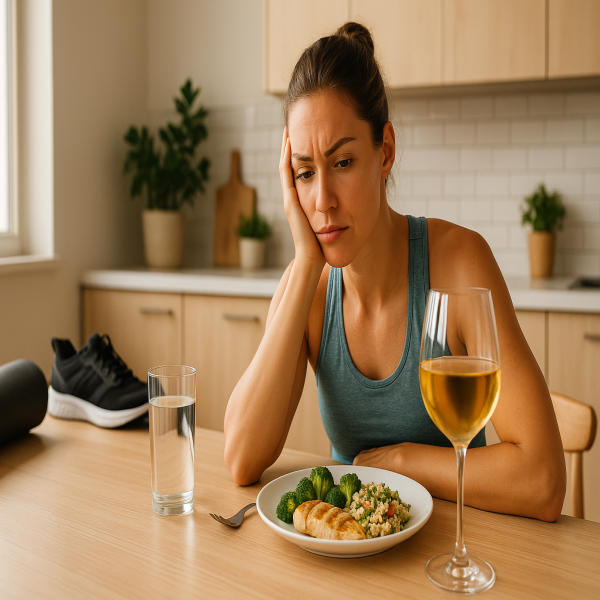
You've been perfect all day. Protein-packed breakfast? Check. Gym session? Crushed it. Healthy lunch? Nailed it. You're feeling unstoppable, riding that wave of discipline and progress.
Then 6pm rolls around. The kids are finally settled. Work emails have stopped. You sink into the couch, and suddenly that glass of wine (or three) feels like the only thing standing between you and complete burnout. Before you know it, you've undone hours of careful choices with what feels like the only "me time" reward you get all day.
If this sounds painfully familiar, you're not alone. This pattern is one of the most common barriers to progress we see, and here's why it's so hard to break: Evening drinks aren't really about the alcohol. They're about the ritual, the transition, and the desperate need for a mental break.
Why Willpower Fails at Wine O'Clock
Let's be honest about what's really happening when 6pm hits. You've spent the entire day making decisions, solving problems, managing other people's needs, and exercising self-control in a hundred small ways. Your willpower isn't infinite—it's a resource you've been depleting since your alarm went off this morning.
That evening drink represents a psychological finish line. It says "I'm done. I've earned this. This is my time." The problem isn't that you lack discipline. The problem is that you're trying to fight a deeply ingrained habit without addressing what it's actually giving you.
The Hidden Cost That No One Talks About
Here's what makes evening drinking so insidious for your goals: a couple of glasses of wine might feel like a small indulgence, but the ripple effects are massive.
Those two glasses of wine aren't just 300 empty calories. They're also disrupting your sleep quality, which means you'll wake up less recovered and reaching for extra coffee and snacks tomorrow. They're lowering your inhibitions, which means you're more likely to raid the pantry at 9pm for chips you'd never touch during the day. They're affecting your liver's ability to metabolize fat efficiently, which means that clean eating you did all day won't work as hard for you.
The real kicker? Most people dramatically underestimate how much alcohol is actually slowing their progress because they're not accurately tracking its true impact. When you're mentally checking off "did well today" without accounting for those evening drinks, you're operating with incomplete data.
Breaking the Evening Drink Cycle: Strategies That Actually Work
The key to changing this pattern isn't just "drink less." You need to replace the ritual with something equally satisfying while addressing the underlying needs driving the behavior.
Create a new transition ritual.
The evening drink marks the end of "productive you" and the start of "relaxed you." Find another way to mark this transition that feels just as indulgent. Some people swear by a long shower with their favorite music. Others make an elaborate mocktail with fancy glassware and fresh herbs. The ritual matters more than the substance. One person we know changes into their "evening outfit"—soft loungewear that signals their brain that the workday is officially over, without needing alcohol to make that announcement.
Address the actual stress.
If you're drinking to decompress, ask yourself what specifically you're trying to decompress from. Is it mental exhaustion from decision-making? Physical tension from being "on" all day? Emotional depletion from managing others' needs? Different stresses need different solutions. Mental exhaustion might need 20 minutes of mindless scrolling or a trashy TV show. Physical tension might need stretching or a walk. Emotional depletion might need connection with a friend or some creative outlet. Alcohol is a blunt instrument trying to solve problems that need more targeted solutions.
Reframe what you've "earned."
You absolutely deserve a reward for crushing your day. But what if the real reward isn't the immediate pleasure of that drink, but the long-term pleasure of waking up feeling sharp, seeing progress in the mirror, and actually achieving the body goals you set for yourself? This isn't about denying yourself—it's about choosing the reward that actually serves future you. You're not "giving up" your evening drink; you're trading up for something better.
Make it inconvenient.
Simple friction can be surprisingly effective. Keep alcohol out of the house on weeknights. If you want a drink, you have to go out and get it. That extra barrier gives you time to ask yourself if you really want it or if you're just on autopilot. For many people, the answer is autopilot, and the simple act of having to make a conscious choice is enough to break the pattern.
Plan your indulgences strategically.
Going cold turkey rarely works because it feels like punishment. Instead, choose specific occasions when you'll drink—Friday dinner, Sunday afternoon—and make those occasions special. When you know you have that to look forward to, it's easier to skip the mindless Tuesday and Wednesday drinking because you're not "never" drinking again. You're just being selective about when it matters.
Find accountability that doesn't feel like judgment.
Tell someone what you're working on. Not in a "I'm being bad and need to stop" way, but in a "this is what I'm trying to achieve and I'd love your support" way. Sometimes just knowing you'll have to report back to someone is enough to help you pause before pouring that glass.
The One Thing That Changes Everything: Seeing the Real Impact
Here's the truth that transforms most people's relationship with evening drinks: when you can see exactly how much those drinks are costing you in real, measurable terms, the decision suddenly becomes much easier.
The problem with "I'll just drink less" is that it's abstract. Your brain doesn't emotionally connect with abstract concepts. But when you can see that those two glasses of wine last night are the reason you're 500 calories over target today and three days further from your goal weight? That's concrete. That's real. That's motivating.
This is where most tracking apps fail you. They let you log alcohol, sure, but they don't help you connect the dots between that entry and why your progress has stalled. The calories get buried in a daily total, and you never really see the full picture of how much that nightly habit is actually costing you.
FlexiDiet Shows You What You're Really Trading
FlexiDiet was built specifically to solve this disconnect. With one-tap logging, you can quickly add that evening wine or beer to your day. But here's what makes it different: FlexiDiet doesn't just show you the calories. It shows you exactly how much those drinks are slowing down your progress toward your specific goals.
You get to see in real-time what you're trading. That glass of wine isn't just 150 calories—it's the difference between hitting your target this week or pushing your goal back another few days. When you can visualize that trade-off clearly, the choice becomes obvious. Some nights, you'll decide it's worth it. Other nights, you'll realize you'd rather have the progress.
The genius is in the simplicity. No judgment, no shame, no complicated tracking. Just clear visibility into what your choices actually mean for the goals you've set. Most people find that once they can see the real impact, they naturally start making different choices—not because they're forcing themselves, but because the motivation finally clicks into place.
Your Evening Routine, Reimagined
Breaking the evening drink habit isn't about becoming a different person with superhuman willpower. It's about understanding what the ritual is really giving you, finding better ways to meet those needs, and having the tools to make informed choices instead of autopilot decisions.
The people who succeed aren't the ones who suddenly develop perfect discipline. They're the ones who make the invisible costs visible, replace the ritual with something equally satisfying, and give themselves the data they need to see their choices clearly.
You've already proven you can crush it all day. Now it's time to extend that success through to 6pm and beyond—not through deprivation, but through smarter choices backed by clear visibility into what those choices actually mean for your progress.
Ready to See What Your Evening Drinks Are Really Costing You?
FlexiDiet makes it effortless to track your alcohol intake with one-tap logging and shows you exactly how it impacts your progress toward your goals. No judgment, no guessing—just clear data that helps you make choices that actually serve your future self.
Join the FlexiDiet community and finally crack the 6pm wine o'clock code. Get personalized meal plans that work for your whole family, intelligent leftover management so you're never starting from scratch at dinner time, and the visibility you need to make evening choices that support your goals instead of sabotaging them.
Start Your FlexiDiet Journey Today →
Your future self is going to thank you for making this decision right now, at whatever time you're reading this. Even if it's 6pm.
Key Takeaways
- ✓Evening drinks are more about the ritual and need for a mental break than the alcohol itself.
- ✓Willpower is depleted throughout the day, making it harder to resist evening drinks.
- ✓Evening drinking has hidden costs, such as disrupted sleep and impaired metabolism, which hinder progress.
- ✓To break the cycle, replace the evening drink ritual with something satisfying that meets the underlying needs.